Choosing the right business phone system affects daily operations, costs, and how easily you support remote staff. Here’s how VoIP and traditional landlines compare, and what to consider when deciding.
VoIP (Voice over Internet Protocol)
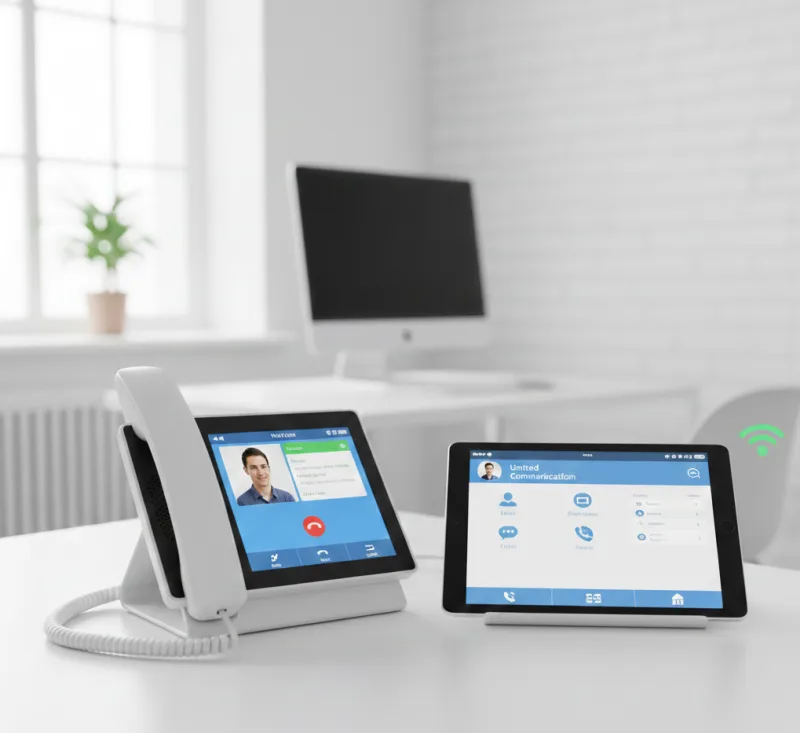
VoIP uses your internet connection to make calls instead of copper phone lines. Calls go over the same network as your data. Benefits include lower cost (often a flat monthly fee), easy scaling, call forwarding, voicemail-to-email, and support for remote workers who can use a softphone or app on their laptop or mobile.
Traditional landline
Landlines use the public switched telephone network (PSTN) over copper or fibre. They tend to be more expensive and less flexible, but can be useful if you need maximum uptime in areas with unreliable internet or if you rely on fax or legacy systems.
Key considerations
- Internet quality, VoIP depends on a stable connection; landlines are independent
- Remote or hybrid teams, VoIP supports softphones and mobile apps; landlines do not
- Cost, VoIP usually offers lower recurring costs and simpler pricing
- Features, VoIP often includes call recording, IVR, queues, and integrations with Teams or Slack
Quick summary
For most small businesses, VoIP is the better choice: lower cost, more features, and better support for remote work. Landlines still make sense where internet reliability is poor or where you need compatibility with legacy systems. An IT or telecom provider can help you choose and set up the right system.
Need Professional Help?
Looking for the right phone system for your business? 365wiz offers professional phone system setup and configuration services, including VoIP and traditional landline solutions.